
Why is Spanish an FSI Category I language? What 600 to 750 hours really means, why cognates help English speakers, and a plan to start speaking sooner.
You've probably seen the claim floating around: "Spanish is one of the easiest languages for English speakers to learn." Maybe a friend said it, maybe a YouTube video promised you'd be fluent in three months. And part of you believes it, but another part is staring at a conjugation chart wondering why "easy" still feels so hard.
Here's the good news: that "easy" label isn't just marketing. It comes from the U.S. State Department, and there's a real number behind it. Let's unpack what it actually means for you.
What the FSI Category System Actually Is
The Foreign Service Institute (FSI) is the branch of the U.S. State Department that trains diplomats. These are people who get sent abroad and need to work in a new language fast — reading reports, negotiating, giving speeches. So the FSI has spent decades figuring out, roughly, how long it takes an English-speaking adult to learn each language.
They sorted languages into categories based on difficulty. Category I is the easiest group for native English speakers, and Spanish sits right there alongside French, Italian, and Portuguese. On the other end, Category IV languages like Korean, Japanese, Arabic, and Mandarin can take four times as long.
For Spanish, the FSI estimate is about 600 to 750 hours of class and study to reach what they call "Professional Working Proficiency" — roughly 24 weeks of intensive, full-time daily training.
That's the headline. Now let's figure out what it really means for someone learning at home, not in a diplomat's classroom.
Why Spanish Lands in the Easy Group
Spanish isn't easy because it's simple. It's easy for English speakers because the two languages share a huge amount of DNA. English borrowed thousands of words from Latin and French, and Spanish comes straight from Latin, so you already know more Spanish than you think.
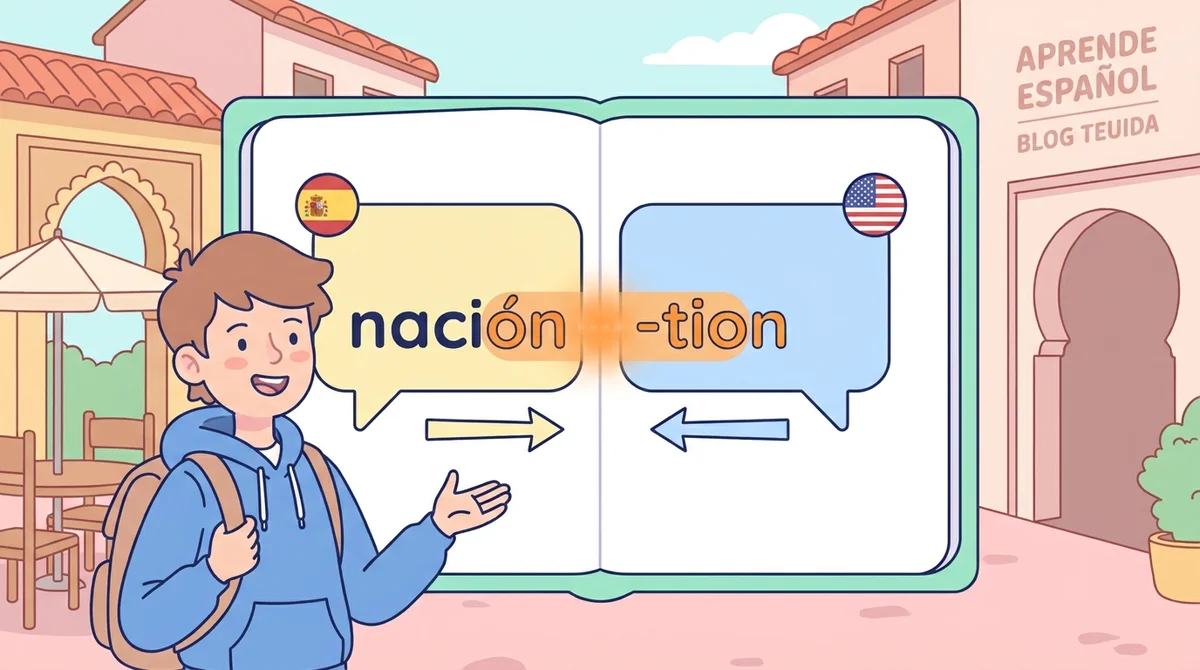
Look at these before you've studied a single lesson:
| Spanish | English | What's going on |
|---|---|---|
| nación (nah-see-OHN) | nation | -ción ↔ -tion |
| importante (eem-por-TAHN-teh) | important | nearly identical |
| familia (fah-MEE-lee-ah) | family | one letter off |
| restaurante (res-tow-RAHN-teh) | restaurant | basically the same |
| doctor (dok-TOR) | doctor | spelled the same |
These are called cognates — words that look and mean almost the same thing in both languages. Spanish is packed with them, which is a big reason the FSI rates it so gently.
On top of that, Spanish spelling is phonetic. Once you learn the five vowel sounds, you can read almost any word out loud correctly, even one you've never seen. English is a chaotic mess of silent letters and exceptions — Spanish is refreshingly honest about how it sounds.
Common Mistakes Learners Make With the "600 Hours" Number
The FSI number is useful, but learners twist it in a few predictable ways. Let's clear those up.
Mistake 1: Reading "600 hours" as a guarantee. The FSI figure assumes a motivated adult in a classroom five days a week, plus homework, with a trained teacher. If you study 20 minutes a day while distracted, 600 hours of that won't take you to the same place. Quality of practice matters as much as quantity.
Mistake 2: Thinking the clock only counts class time. Those 600–750 hours include self-study — homework, review, reading, and crucially, speaking practice. The classroom is only part of it. Your hours at home count too.
Mistake 3: Assuming "Category I" means no effort. Easier than Korean is not the same as effortless. Spanish still has gendered nouns, two verbs for "to be," and a subjunctive mood that trips people up for years. Category I means the mountain is shorter — not that there's no mountain.
Mistake 4: Waiting to speak until you "know enough." This is the big one. Many learners spend hundreds of those hours silently reading and doing flashcards, then panic the first time a real person speaks Spanish to them. Speaking is a separate skill, and it only grows when you actually do it.
How to Actually Hit Professional Proficiency (A Realistic Plan)
Let's translate the FSI framework into something you can use. "Professional Working Proficiency" (the FSI's target) means you can handle work and social situations with ease and accuracy. Here's how the road usually breaks down.
Step 1 — Survival basics (0–50 hours). Greetings, numbers, ordering food, asking directions. You'll lean hard on cognates here and get quick wins.
Step 2 — Core grammar and present tense (50–200 hours). Regular verbs, the two "to be" verbs ser (sehr) and estar (es-TAR), noun gender, and basic questions. This is where daily speaking habits start to pay off.
Step 3 — Past and future, real conversation (200–400 hours). You start telling stories — what you did, what you'll do. The subjunctive begins to appear. You can hold a real chat, even if it's bumpy.
Step 4 — Fluency and nuance (400–750 hours). Complex sentences, idioms, faster listening, and speaking without translating in your head. This is the stretch that takes the most patience.
Here's the key that the raw hour count hides: speaking hours are worth more than passive hours. An hour spent saying sentences out loud moves you further than three hours of silent reading. If you weight your routine toward speaking, you often reach conversational comfort well before the full 600 hours are up.
Real-Life Example Sentences
Let's see what "proficiency" sounds like at each stage. Read every line out loud — don't just scan it.
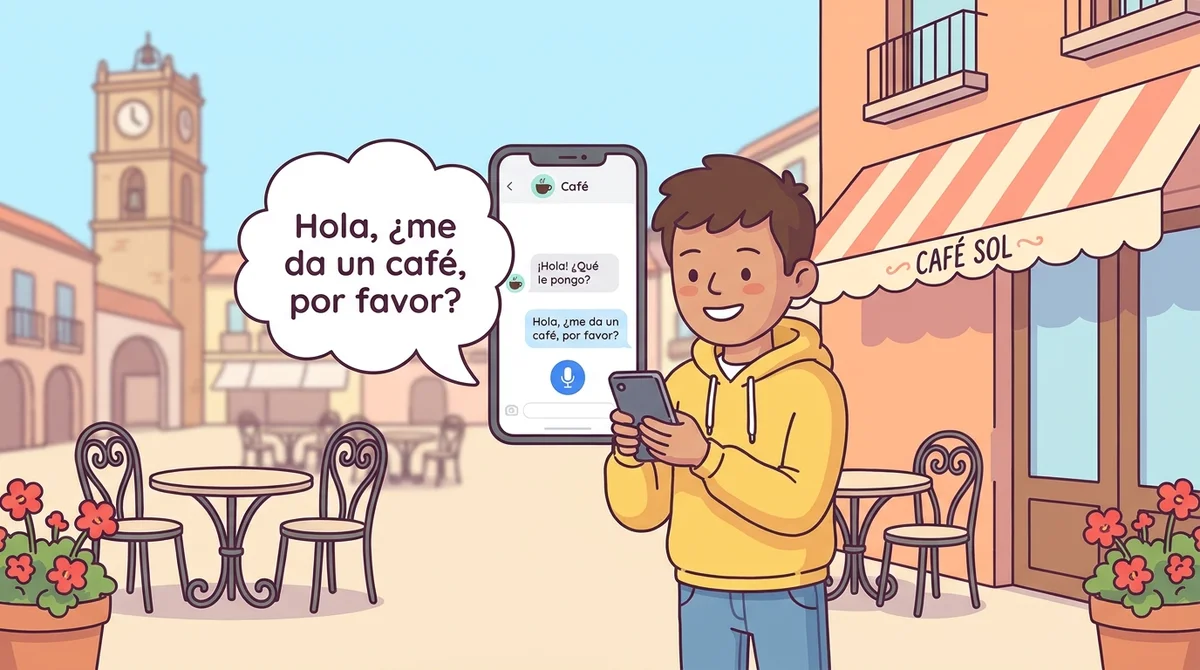
Beginner — ordering coffee:
Hola, ¿me da un café, por favor?
(OH-lah, meh dah oon kah-FEH, por fah-VOR)
"Hi, could I have a coffee, please?"
Claro, ¿algo más?
(KLAH-roh, AHL-goh mahs)
"Sure, anything else?"
No, gracias. ¿Cuánto es?
(noh, GRAH-see-ahs. KWAN-toh es)
"No, thanks. How much is it?"
Intermediate — talking about your day:
Ayer fui al mercado y compré frutas.
(ah-YEHR fwee ahl mer-KAH-doh ee kom-PREH FROO-tahs)
"Yesterday I went to the market and bought fruit."
¿Y qué vas a hacer mañana?
(ee keh vahs ah ah-SEHR mah-NYAH-nah)
"And what are you going to do tomorrow?"
Upper-intermediate — expressing opinion with the subjunctive:
Espero que todo salga bien en tu entrevista.
(es-PEH-roh keh TOH-doh SAHL-gah bee-EN en too en-treh-VEES-tah)
"I hope everything goes well in your interview."
Notice how the sentences grow? That's the FSI ladder in action — and every rung is climbed by speaking, not by memorizing silently.
Practice Tips: Make Your Hours Count
If the FSI number teaches us one thing, it's that hours add up — so the real question is what you do with them. Here's how to make each one worth more.
Speak from day one. The single biggest reason learners stall is that they wait too long to open their mouths. You don't need perfect grammar to say "un café, por favor." Say it badly, then say it better. That's the whole game.
Practice in context, not in lists. Memorizing 50 words in a column is forgettable. Saying those words inside a real café scene is sticky, because your brain files them with a situation, not a definition.
Repeat out loud, every day, even for ten minutes. Consistency beats marathon sessions. Ten focused minutes of speaking daily will carry you further than a three-hour cram once a week.
This is exactly where Teuida fits your Spanish journey. Teuida is a speaking-first app — in its Spanish course, you step into real-life conversation scenes filmed with real people (ordering at that café, meeting someone new, asking for directions) and you say every line out loud. Instead of grinding flashcards toward a distant hour count, you're actually speaking Spanish in context from the very first lesson. The scenes give you a real reason to talk, and the talking is what makes those FSI hours actually convert into proficiency.
Because here's the honest truth the 600-hour figure can't capture: proficiency isn't recognizing Spanish, it's producing it. The app won't grade you or tell you what to fix — it simply hands you the scene and the reason to speak, and you do the speaking. That's where real fluency is built.
You Already Have a Head Start
So here's where we land. Spanish is a Category I language because you, as an English speaker, are starting with thousands of words already half-learned and a spelling system that plays fair. The FSI says 600 to 750 hours to professional proficiency — but how fast those hours pass depends entirely on how much of them you spend actually speaking.
Don't treat the number as a wall to climb. Treat it as proof that the path is shorter than for almost any other language, and that every out-loud sentence gets you there faster.
Start today with one line — "Hola, ¿cómo estás?" — and keep going. Open Teuida's Spanish course, step into your first café scene, and practice this out loud until it feels like yours.


