
Wondering how much Korean you need for a trip to Korea? Here's an honest situation-by-situation breakdown, the essential 주세요 phrases, and a 2-week prep plan before you fly.
You've booked the flight. The hotel is confirmed, the itinerary is bursting with palaces and pork belly, and then, somewhere around 2 a.m., a new worry creeps in: "Wait — do I need to actually speak Korean?"
It's the question every first-time visitor asks. And the honest answer is somewhere between "not much" and "a little more than you'd think." Let's figure out exactly what that means for you, so you can stop stressing and start packing.
Why This Question Matters More Than You Think
Korea is one of the most traveler-friendly countries in Asia. Signage in Seoul is often bilingual, subway announcements are in English, and younger Koreans frequently study English in school. You can technically get through a trip with zero Korean.
But "getting through" and "having a great time" are two different experiences. A few words of Korean change how people treat you almost instantly. A cashier softens. A taxi driver relaxes. An ajumma at a market slips an extra side dish onto your plate.
So the real question isn't "Can I survive without Korean?" It's "How much Korean gives me the biggest payoff for the least effort?" That's what we're going to answer — with a clear list, not vague reassurance.
The Honest Breakdown: How Much You Need by Situation
Not all travel moments need the same level of Korean. Ordering food is very different from asking a stranger for directions. Here's a realistic look at where you'll actually need the language and how much.
| Situation | Korean needed | Reality on the ground |
|---|---|---|
| Airport & immigration | Almost none | English signage and staff everywhere |
| Hotels (mid-range and up) | Very little | Front desk usually speaks English |
| Subway & buses | A little | Signs are bilingual; announcements often in English |
| Taxis | A little–moderate | Many drivers speak no English; address help matters |
| Restaurants & cafés | A little | Pointing works, but phrases make it smoother |
| Traditional markets | Moderate | Older vendors rarely speak English |
| Convenience stores | Very little | Self-checkout and pointing cover most of it |
| Emergencies / pharmacies | Moderate | A few key phrases genuinely help |
| Small towns & countryside | Moderate–high | English drops off fast outside big cities |
The pattern is clear. In central Seoul or Busan, you can lean on English and gestures. The moment you step into a traditional market, hop in a taxi, or take a day trip to a smaller city, a handful of Korean phrases stops being "nice to have" and becomes genuinely useful.
The good news? That handful is small. You don't need grammar drills or verb conjugations. You need maybe 20–30 practical phrases and the ability to read Hangul at a basic level.
Common Mistakes Travelers Make
Before we get to the phrases, let's clear up the traps that trip people up — because avoiding these saves you real headaches.
Mistake 1: Skipping Hangul entirely. People assume Korean script is too hard to learn for one trip. It's not. Hangul is famously logical and most travelers can learn to sound out words in a few hours. Being able to read 화장실 (hwajangsil), "restroom," or a bus destination sign is a superpower.
Mistake 2: Relying only on romanization. Romanized Korean (writing Korean sounds with English letters) is fine for a cheat sheet, but it often misleads you on pronunciation. The city 인천 looks like "Incheon" but the vowels won't sound the way an English reader expects.
Mistake 3: Learning "textbook" Korean nobody uses casually. Some apps teach you long, formal sentences you'll never say to a café worker. What you actually need is short, polite, real-world speech.
Mistake 4: Forgetting the two little words that do everything. More on those in a second — but if you learn nothing else, learn "please" and "thank you." Travelers who skip them come across as brusque without meaning to.
Mistake 5: Being too afraid to try. Koreans are generally delighted when a visitor attempts even one clumsy phrase. Your accent doesn't need to be perfect. Effort is the whole point.
The Phrases That Actually Earn Their Keep
Here's your realistic starter kit — the phrases that give you the most mileage. Learn these and you'll handle the vast majority of everyday travel moments.
The essentials (learn these first):
- 안녕하세요 (annyeonghaseyo) — "hello"
- 감사합니다 (gamsahamnida) — "thank you"
- 네 (ne) — "yes" / 아니요 (aniyo) — "no"
- 죄송합니다 (joesonghamnida) — "I'm sorry / excuse me"
- 주세요 (juseyo) — "please give me…" (the single most useful word for shopping and ordering)
For restaurants and cafés:
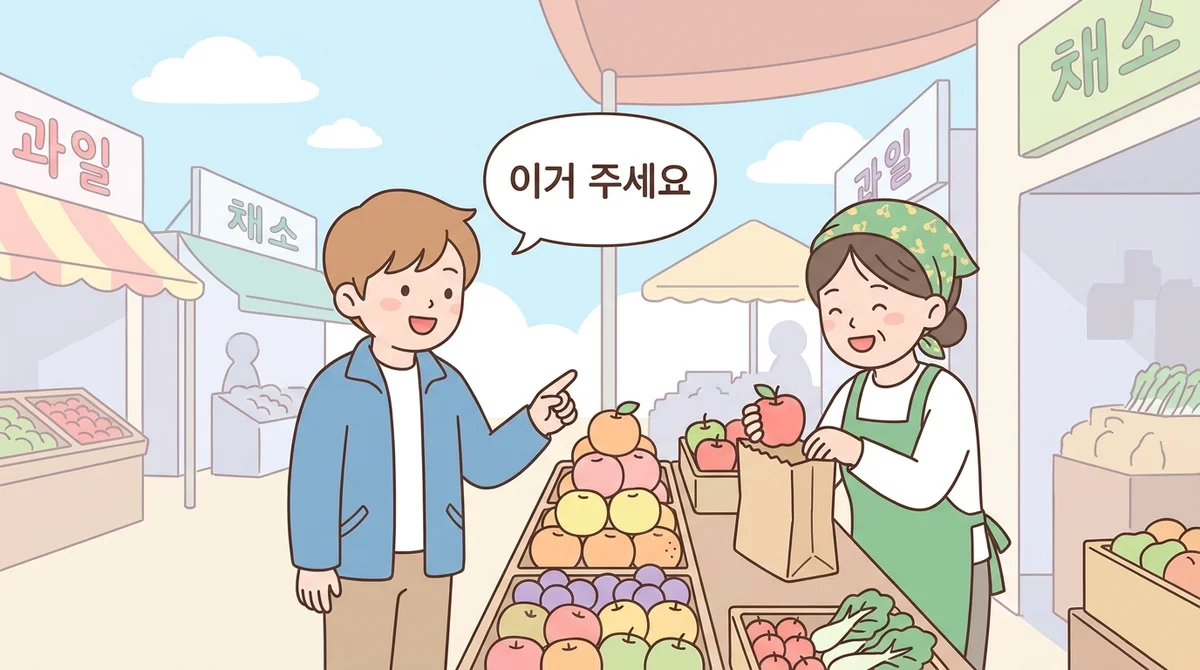
- 이거 주세요 (igeo juseyo) — "this one, please" (point at the menu)
- 얼마예요? (eolmayeyo?) — "how much is it?"
- 계산해 주세요 (gyesanhae juseyo) — "the bill, please"
- 맛있어요 (masisseoyo) — "it's delicious"
For getting around:
- 여기요 (yeogiyo) — "over here / excuse me" (to get attention or tell a taxi to stop)
- 화장실 어디예요? (hwajangsil eodiyeyo?) — "where's the restroom?"
- 괜찮아요 (gwaenchanayo) — "it's okay / no thanks"
Notice how many of these end in 주세요 (juseyo) or 요 (yo). That little 요 sound makes speech polite, and Koreans hear it as friendly and respectful. You can attach it to almost anything and stay on safe ground.
A Simple Plan: What to Learn Before You Fly
You don't need months. Here's a realistic prep schedule you can start even two weeks before your trip.
Step 1 — Learn to read Hangul (2–4 hours total). Spread it over a few short sessions. Your goal isn't fluency; it's being able to sound out signs, menus, and station names. This alone transforms your confidence.
Step 2 — Memorize the 5 essentials. 안녕하세요, 감사합니다, 죄송합니다, 네/아니요, and 주세요. Say them out loud until they feel automatic.
Step 3 — Add your "situation" phrases. Pick the settings you know you'll be in. Foodie trip? Focus on the restaurant phrases. Lots of taxis? Drill 여기요 and how to say your destination.
Step 4 — Practice the numbers you'll actually use. You don't need all of Korean's counting systems for a trip. Learn to recognize prices (they're usually shown on a screen anyway) and how to say a couple of quantities like 하나 (hana), "one," and 둘 (dul), "two."
Step 5 — Rehearse out loud, not just in your head. This is the step everyone skips and the one that matters most. Reading a phrase silently and saying it to another person are completely different skills. Which brings us to the fun part.
Real-Life Mini-Dialogues You'll Actually Use
Let's put it together. Here are three tiny exchanges that mirror what really happens on the ground.
At a café:
- You: 아메리카노 하나 주세요. (amerikano hana juseyo.) — "One americano, please."
- Barista: 네, 여기서 드세요? (ne, yeogiseo deuseyo?) — "Sure, for here?"
- You: 네, 감사합니다. (ne, gamsahamnida.) — "Yes, thank you."
In a taxi:
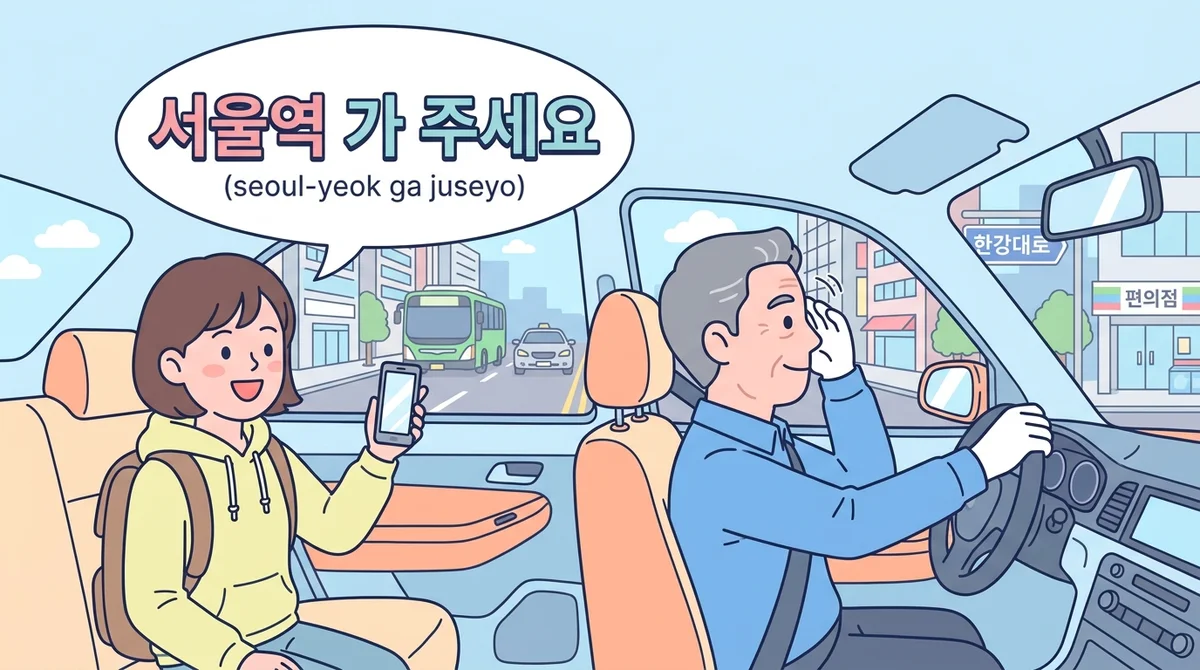
- You: 서울역 가 주세요. (seoul-yeok ga juseyo.) — "To Seoul Station, please."
- Driver: 네. (ne.) — "Okay."
- You (when you arrive): 여기요, 감사합니다. (yeogiyo, gamsahamnida.) — "Here is fine, thank you."
At a market:
- You: 이거 얼마예요? (igeo eolmayeyo?) — "How much is this?"
- Vendor: 오천 원이요. (ocheon won-iyo.) — "Five thousand won."
- You: 이거 주세요. 감사합니다! (igeo juseyo. gamsahamnida!) — "I'll take this. Thank you!"
Notice that none of these are complicated. They're short, polite, and built from the exact words in your starter kit. This is what "enough Korean for a trip" really looks like — not paragraphs, just friendly building blocks.
How to Make These Phrases Actually Stick
Here's the uncomfortable truth: reading this list won't make you able to speak it. Recognition and production are different skills. You can understand 얼마예요? perfectly on paper and still freeze when a vendor is looking at you.
The only fix is saying the words out loud, ideally in a realistic back-and-forth, before you're standing in the actual café with a line forming behind you. You need reps where you speak and get feedback on how you sound.
That's exactly what Teuida is built for. It's a speaking-first app — instead of grinding flashcards, you role-play real travel situations out loud: ordering coffee, flagging a taxi, haggling at a market. The scenarios mirror the exact moments in this post, so you're rehearsing the real thing, not abstract grammar.
Even better, Teuida's AI pronunciation feedback scores how you say each phrase and helps you fix it — the next best thing to having a Korean friend beside you. Run through the travel scenarios in Teuida's Korean course a few times before you fly, and 이거 주세요 will roll off your tongue without a second of hesitation.
Ten minutes a day for two weeks. That's genuinely enough to walk into Korea feeling ready instead of nervous.
You're More Ready Than You Think
So — how much Korean do you actually need for a trip to Korea? Less than you feared, but a little more than nothing. Learn to read Hangul, master a dozen polite phrases, and practice them out loud, and you'll handle everyday travel with ease and a lot more warmth.
You don't need to be fluent. You need to be friendly and functional, and that's an incredibly achievable goal before your flight even boards.
Start with just five phrases today, say them out loud until they feel natural, and rehearse them in real travel scenarios in Teuida's Korean course — so your first "감사합니다" in Seoul comes out sounding like you belong there.


