Discover why a speaking first approach works better for korean conversation practice and how to build confidence using real-life phrases, not just grammar rules.
If you've ever opened a Korean textbook and felt your brain melt by page 3, you are not alone.
Many learners start with grammar charts, memorizing the korean alphabet, and long vocabulary lists. After months of "studying," they still freeze when someone says a simple "안녕하세요?"
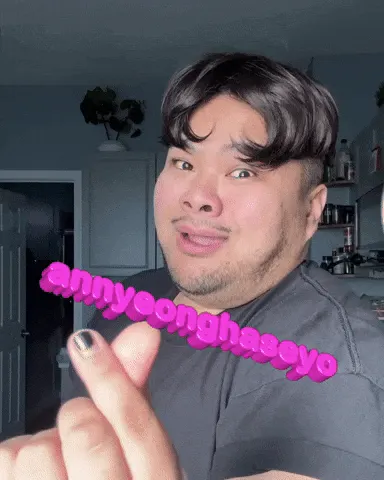
That's why a speaking first approach can feel like a breath of fresh air.
You focus on real korean conversation practice from day one. Short phrases. Real-life situations. Your mouth actually moving. Your ears getting used to the sounds.
You don't ignore grammar forever. You just don't make grammar the boss anymore. Speaking and real communication come first, and grammar quietly supports you in the background.
Let's walk through why this works so well for Korean, and how you can start using it in your own language learning routine.
1. Korean sounds very different from English - your mouth needs practice
Korean has sounds and rhythm patterns that are quite different from English and many other languages. Reading about them is not enough. Your mouth needs reps, like a gym.
A speaking first approach to learn korean helps you:
- Get used to syllable blocks and sound flow, not just letters on a page
- Feel the difference between ㅐ / ㅔ, ㅗ / ㅓ, long vs short sounds
- Learn natural intonation for questions, polite endings, and everyday phrases
For example, seeing "괜찮아요" on a page and actually saying "gwaen-cha-na-yo" out loud are two completely different experiences.

When you start with korean speaking practice, you're telling your brain:
"This language is for talking, not just for tests."
That mindset shift makes you braver in real conversations.
2. Speaking first keeps you motivated because you feel results faster
If this feels hard at first, that's completely normal. But here's the good part: speaking gives you quick little wins.
Imagine this:
- Day 1: You learn to say "안녕하세요, 저는 [Name]이에요/예요."
- Day 3: You can order something simple: "아메리카노 한 잔 주세요."
- Day 7: You can ask, "화장실 어디에 있어요?" and actually understand the answer.
You're already using Korean. That feeling is addictive (in a good way).
Textbook-only study gives you knowledge, but speaking first gives you stories:
"I talked to a barista in Korean today."
"I introduced myself to a Korean friend."
Those moments are worth more than a perfect grammar score. They keep you coming back.
3. Korean sentence structure is easier to absorb through patterns
Korean word order (Subject-Object-Verb) can feel strange at first. But if you focus on full phrases and mini-sentences, your brain slowly catches the pattern without heavy explanation.
Instead of memorizing:
Subject + object + verb + polite ending
You repeatedly say:
- "물 주세요." (Please give me water.)
- "영수증 주세요." (Receipt, please.)
- "사진 같이 찍어도 돼요?" (Can we take a photo together?)
After enough korean conversation practice, you start to feel:
"Ah, the action (verb) usually comes at the end."
Later, when you look at grammar explanations, they make more sense because your brain already has real examples. Speaking-first gives you a foundation; grammar gives you labels for what you already know.
4. Your listening improves faster when you speak early
Speaking and listening are a team. When you focus only on reading, your ears don't get enough training.
With a speaking first approach:
- You repeat after native audio (shadowing)
- You use a learn korean app or korean speaking practice app with real voices
- You match what you say with what you hear
Because you've already spoken phrases like "이거 뭐예요?" (What is this?) many times, they pop out clearly when someone else says them in real life.
This is why so many learners feel a big jump when they start real korean speaking practice instead of staying stuck in silent study.
5. Speaking first helps shy learners build courage step by step
If you're shy or nervous about accents, starting with speaking can sound scary. But done gently, it's actually kinder to you.
Here's a soft, safe path:
- Private practice
- Talk to yourself in Korean at home
- Use a speak korean app or learn to speak korean app where nobody is judging you
- Recorded practice
- Record your voice, compare with native audio, adjust slowly
- Guided practice
- Use a korean speaking practice app like TEUIDA, where tutors guide you line by line
- Real people
- Join korean speaking classes or work with a korean conversation tutor once you feel ready
Each step builds a little more courage. You don't have to jump straight into a live class if that feels too much. You can warm up in a safe space first.
6. Why this fits perfectly with apps like TEUIDA
Most traditional apps and textbooks focus heavily on reading and grammar. That can be useful, but if your goal is to learn to speak korean, you need tools that actually make you speak.
A speaking-first language study app like TEUIDA is built exactly for this:
- First-person video scenes (you answer as if you're really there)
- Realistic dialogues in cafes, streets, shops, and daily life
- Instant pronunciation feedback
- Bite-sized missions that feel like real korean conversation practice, not drills
You can still use other language learning applications or free korean lessons on YouTube for grammar and explanation. But TEUIDA becomes your "speaking gym" - the place you train your actual conversation muscles.
For many learners, this mix becomes the best way to learn to speak korean:
- App or videos for speaking scenes
- Extra content to support vocabulary and grammar
- Occasional korean speaking classes or korean conversation class for live feedback
7. A simple speaking-first routine you can start this week
Here's a gentle 7-day plan to try the "speaking first" approach yourself. You can mix TEUIDA or any learn korean app you already use.
Day 1 - Learn 3 survival phrases
- 안녕하세요 (Hello)
- 감사합니다 (Thank you)
- 이거 주세요 (This please)
Say each one out loud 10 times. Extra: record once.
Day 2 - Build a mini cafe script
- "안녕하세요."
- "아메리카노 한 잔 주세요."
- "가지고 갈게요." (To go, please.)
Repeat this full dialogue several times, as if you're really at the counter.
Day 3 - Self-introduction
- "저는 [Name]이에요/예요."
- "[Country]에서 왔어요."
- "한국어 조금 할 수 있어요." (I can speak a little Korean.)
Use a korean speaking practice app or learn to speak korean online free materials to hear native audio.
Day 4 - Listening + shadowing
- Choose one short video or app lesson
- Listen once, then repeat every line (shadowing)
- Focus on rhythm, not perfection
Day 5 - Real micro-conversation
- Say "안녕하세요" and "감사합니다" to at least one real person (online or offline)
- If possible, use one full sentence from your scripts
Day 6 - Review and expand
- Review all phrases from Days 1-5
- Add one new sentence, like "화장실 어디에 있어요?"
Day 7 - Check your progress
- Re-record your cafe script and self-introduction
- Compare with Day 1. Notice: pronunciation, speed, and confidence often improve more than you think.
If you can repeat a small plan like this for a few weeks, you'll feel a big difference in how natural it feels to speak korean.
You're doing great just by planning to speak more. That decision alone is a huge step forward.