
Korean vs Japanese Grammar: Key Differences Explained
Korean vs Japanese grammar: same SOV order and particles, but 한글, 은/는 vs 이/가, and Korean sounds differ. Key differences and mistakes to avoid explained.
Understand Korean grammar through real-life examples
15 articlesKorean vs Japanese grammar: same SOV order and particles, but 한글, 은/는 vs 이/가, and Korean sounds differ. Key differences and mistakes to avoid explained.

Learn the difference between 거예요 and 을게요 in Korean. Use these simple rules and real-life examples to speak more naturally.

Learn the difference between 밖에 and 만 in Korean with simple rules, real-life examples, and easy practice sentences.

Learn the difference between 좋다 and 좋아하다 with easy Korean examples for sharing opinions, likes, and everyday feelings.

Learn 지만 vs 는데/은데 in Korean with simple examples, natural usage tips, and real-life Korean conversations for beginners.

Learn 못 vs 안 in Korean with simple examples, real-life dialogues, and easy tips so you can stop mixing them up.

Confused by 에 and 에서? Learn the difference with simple examples, real-life Korean phrases, and easy practice tips.
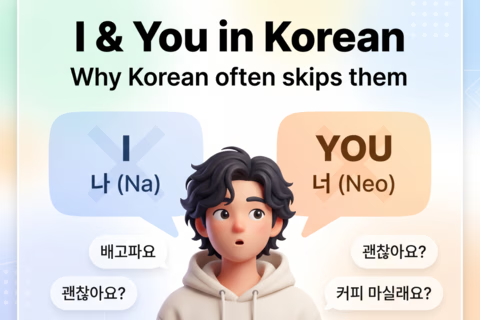
Learn why Korean language speakers often skip “I” and “you,” and how to sound natural when speaking everyday Korean.

Want to sound more fluent in Korean? Learn 10 common Korean sentence connectors that help you combine simple sentences naturally.

Learn how Korean sentence enders like 요, 입니다, and 해 work in real conversations. See when to use each level so you can speak naturally, even as korean for beginners.

Confused by Korean SOV word order? See real-life dialogues that show how subjects, objects and verbs work so you can build natural sentences, even as korean for beginners.

Confused about Korean numbers? Learn when to use native and Sino-Korean for age, time, money, dates, and more. Simple guide for korean for beginners.

Using the wrong apology in Korean can be awkward. Learn exactly when to say 죄송합니다 vs 미안해요 with real conversation examples and politeness rules.

When should you say 오빠 vs 형? Is 선배 only for school? Learn Korean honorifics with real examples so you never accidentally offend someone again.

Korean particles confusing you? This visual guide breaks down 은/는 vs 이/가 with real examples, common mistakes, and a quick self-check quiz.