Confused about 오빠, 언니, and 선배? Learn Korean honorifics with real-life conversation examples and AI pronunciation tips. Speak naturally and respectfully today.
Addressing seniors: using 오빠, 언니, 선배 etc what they mean and when to use them
If you've watched K-dramas or talked with Korean friends, you've probably heard 오빠, 언니, 선배 all the time.
But when it's your turn to speak, you might freeze and think:
"Do I call him 오빠 or just his name? Can I call my teacher 선배?"
You're not alone. Titles are a big part of Korean culture, and getting them right feels scary at first. Let's walk through this together so you know how to address seniors in Korean in a natural, respectful way.

1. Why Korean honorifics matter so much
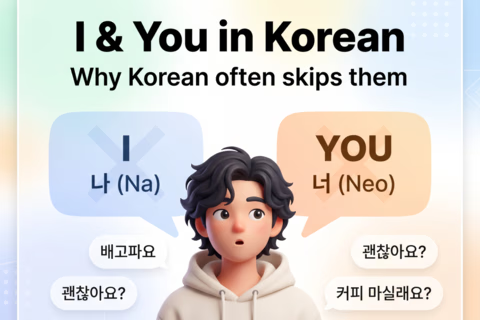
In Korean, you often don't say "you."
Instead, you use Korean honorifics and Korean titles like 오빠, 언니, or 선배 to show age, closeness, and respect.
Using the right word:
- Makes you sound more natural in Korean conversation
- Shows good manners and cultural understanding
- Helps you build warmer relationships with Korean friends, coworkers, and classmates
If this feels like a lot right now, that's totally normal. By the end of this article, you'll have a clear picture of what each title means and when to use it.
2. Family-style titles for everyday life
First, let's look at the "family-style" terms that Koreans use even with non-family. These are super common and important when you learn Korean.
When the speaker is female
- 오빠 (oppa)
- 언니 (unnie / eonni)
오빠 – older brother / close older male
오빠 is used by women for:
- An older brother
- A slightly older male friend
- A boyfriend or husband (if you started as "oppa" friends)
So 오빠 is not only romantic. It simply means a man who is older than you and close to you.
This is your core oppa meaning: "older brother-type man I'm close to."
Example:
여자친구: 민수 오빠, 오늘 시간 있어요?
(Minsoo oppa, are you free today?)
Don't call a stranger 오빠 just because he's older. That can feel too familiar or awkward.
언니 – older sister / close older female
Women use 언니 to address:
- An older sister
- An older female friend
- A close older woman (like a stylist, trainer, etc.)
This is the basic unnie meaning: "older sister-type woman I feel close to."
Example:
여자: 지영 언니, 이 옷 어때요?
(Jiyoung unnie, how is this outfit?)
Using 언니 shows warmth and closeness. It's very common among female friends.
When the speaker is male
Men don't use 오빠 or 언니 for themselves. They have different words:
- 형 (hyung) – older brother / close older male
- 누나 (noona) – older sister / close older female
We'll still bold them as important Korean titles.
형 – older male for men
Men call an older male friend or brother 형.
Example:
남자: 지훈 형, 같이 밥 먹을래요?
(Jihoon hyung, want to eat together?)
누나 – older female for men
Men use 누나 for older sisters or older female friends they're close to.
Example:
남자: 수진 누나, 주말에 뭐 해요?
(Sujin noona, what are you doing this weekend?)
3. 선배 and 후배: more than just "senior" and "junior"
Now let's talk about 선배 and 후배, words you'll hear all the time in school, the office, and clubs.
선배 meaning
선배 means "someone who joined before you" in a shared context, like:
- School (older students)
- University club
- Company or team
- Training program
It's not only about age. Someone younger than you can still be your 선배 if they joined the company or club earlier.
You can say:
- 선배 alone
- Name + 선배 (e.g., 지민 선배)
- 선배님 for extra respect
Example:
신입사원: 지민 선배님, 이 부분 좀 도와주실 수 있어요?
(Jimin sunbae-nim, could you help me with this part?)
후배 – junior
후배 is the opposite: a person who joined after you.
You usually don't call someone directly "야, 후배!" in real life. It can sound a bit stiff or blunt. Instead, you often use their name, sometimes with 씨, or just "younger friend" style.
But you might say:
"그 친구는 회사 후배예요."
(He/She is a junior colleague at my company.)
So:
- 선배 = older in the system (joined earlier)
- 후배 = younger in the system (joined later)
These are key in understanding how to address seniors in Korean at school and at work.
4. When to use titles vs names
Here are some simple guidelines to help you choose the right title in real Korean conversation.
Use family-style titles when:
- You're close and speak casually or politely
- There is a comfortable, friendly relationship
Examples:
- Female → older male friend: 오빠
- Female → older female friend: 언니
- Male → older male friend: 형
- Male → older female friend: 누나
You can also combine name + title:
- 수진 언니
- 민수 오빠
- 지훈 형
- 혜진 누나
This feels very natural in everyday Korean culture.
Use 선배 when:
- You and the person share a system (school, company, club)
- They joined before you
- You want to show respect without sounding too "family-like"
Examples:
- At university: older student in your department
- At work: coworker who joined the company earlier
- In a club: member who has been there longer
You might say:
"수연 선배, 이 과제 어떻게 해요?"
(Suyeon sunbae, how do you do this assignment?)
5. Real-life examples you can copy
Let's look at some short, real situations. Try reading them out loud or with AI pronunciation to get used to the sounds.
Scene 1: University club
You're a first-year student. You meet an older club member.
You: 안녕하세요, 1학년 마크입니다. 잘 부탁드립니다.
Senior: 어, 반가워요. 저는 3학년 지은이에요.
You: 지은 선배, 다음 모임은 언제예요?
Here, you use 선배 because this person is your senior in the same club.
Scene 2: Female speaker with older male friend
You: 민수 오빠, 이 카페 진짜 예쁘다.
민수: 그치? 다음에 또 같이 오자.
You're female, he's an older male friend you're close to, so 오빠 is perfect.
Scene 3: Male speaker with older female friend
You: 수진 누나, 오늘도 야근이에요?
수진: 응, 일 너무 많아.
You're male, she's an older female friend, so you use 누나.
Scene 4: New employee talking to a senior colleague
You: 안녕하세요, 신입사원 유리입니다. 잘 부탁드립니다.
Senior: 반가워요. 저는 5년 차 이현이에요.
You: 이현 선배님, 이 보고서 형식은 이렇게 하면 될까요?
Here you add 님 (선배님) to show even more respect at work.
6. Common mistakes (and how to avoid them)
It's totally okay to make mistakes while you learn Korean, but here are some to watch out for.
Mistake 1: Calling every older man "oppa"
Not every older man is 오빠. Getting the tone right also means avoiding the small missteps covered in our Korean apologies guide when you do slip up.
Use 오빠 only when:
- You're female
- You're familiar/close
- The vibe is friendly, not professional
In a shop or office, it's usually better to say:
- 직원분 (staff member)
- 기사님 (for drivers)
- 사장님 (for shop owners)
Mistake 2: Using 언니 / 오빠 with teachers or bosses
Teachers and bosses are not 오빠 or 언니.
- Teachers: 선생님
- Boss: 대표님, 사장님, 팀장님, etc., depending on role
Mistake 3: Using 선배 only for age
Remember the sunbae meaning: earlier in the same system.
Someone can be:
- Younger than you
- But started university (or work) earlier
- And still be your 선배
Mistake 4: Staying on "씨" forever
Using 씨 with the name is safe and polite, but if you become closer, Koreans may suggest using 오빠, 언니, 형, or 누나 instead.
When someone says:
"언니라고 불러도 돼요."
("You can call me unnie.")
That's a sweet invitation to use a warmer, more personal title.
7. Quick cheat sheet you can remember
Here's a simple summary for how to address people in everyday Korean conversation:
- Female → older male friend: 오빠
- Female → older female friend: 언니
- Male → older male friend: 형
- Male → older female friend: 누나
- School/company/club senior: 선배 / 선배님
- Junior in same system: 후배 (not usually used directly as a call word)
If this feels like a lot, save this section and check it before you talk to someone in Korean. You're doing great.
8. How to practice these with AI pronunciation
To really make these Korean honorifics feel natural, try this mini practice plan:
- Choose 5 short sentences with 오빠, 언니, 형, 누나, 선배.
- Say them out loud and record yourself.
- Use an app or AI pronunciation tool to compare your voice to native speakers.
- Repeat a few times until your tongue and mouth feel comfortable.
The more you say these words in real context, the less you'll have to "think" about them. They'll just come out naturally in conversation — and pairing them with the right sentence enders makes the tone feel even more natural.
You've got this. With a bit of practice, addressing seniors in Korean will feel friendly instead of scary.